
Newer build, different failures
In Pleasant Prairie, that median lands at 1994 - a full generation later. That gap matters more than it sounds like it should, because a door built in 1994 is not built the same way as a door built in 1976.
Pleasant Prairie, Kenosha
Pleasant Prairie's housing stock runs newer than the rest of the Kenosha service area, median build 1994. That changes which parts fail first. We work from Kenosha, 4 miles out.
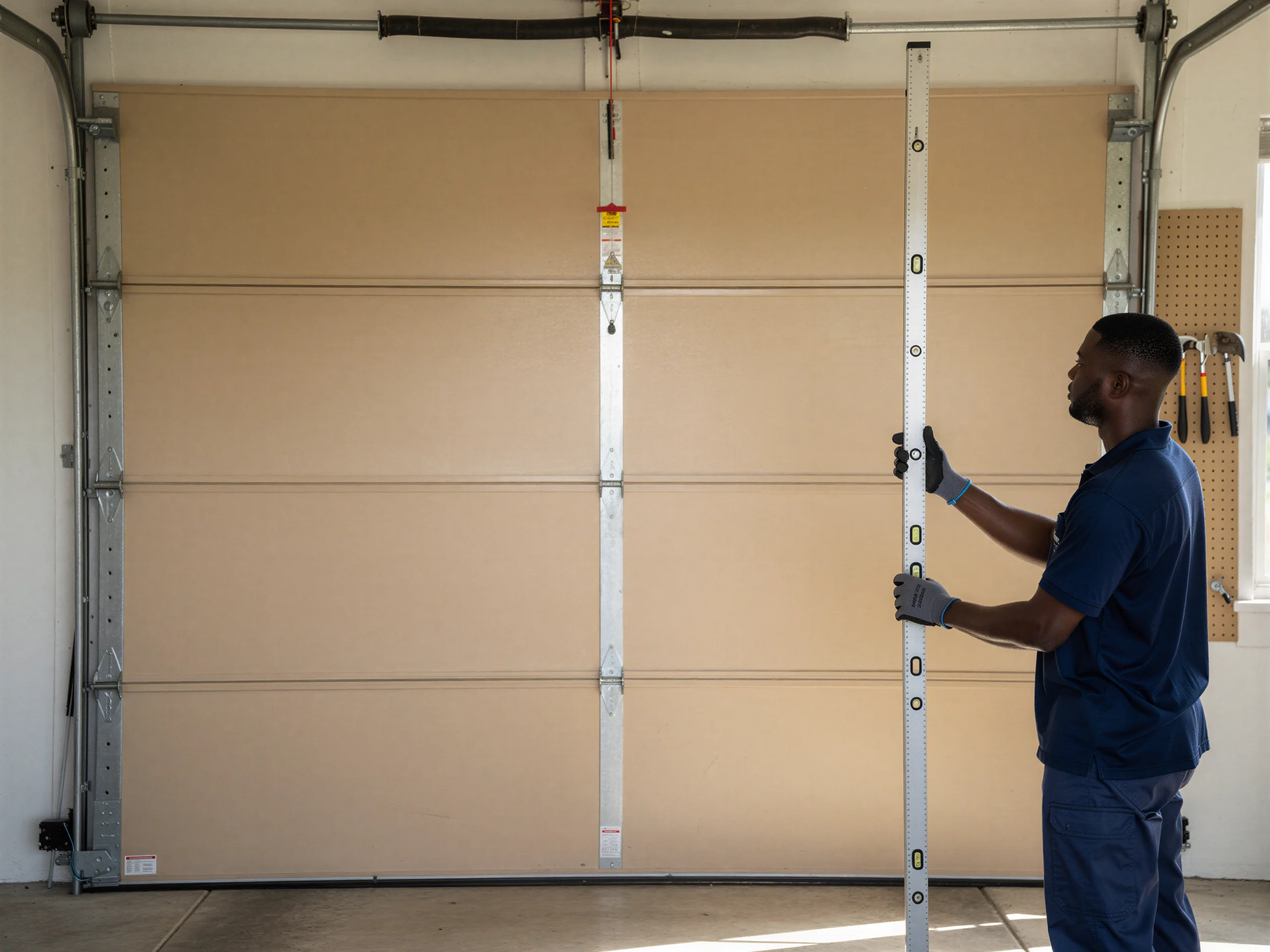
Watch-outs
Pleasant Prairie sits apart from the rest of the Kenosha service area in one important way: the houses here are newer. Across the wider area, homes went up mostly between 1964 and 1994, with a median around 1976.
In Pleasant Prairie, that median lands at 1994 - a full generation later. That gap matters more than it sounds like it should, because a door built in 1994 is not built the same way as a door built in 1976.
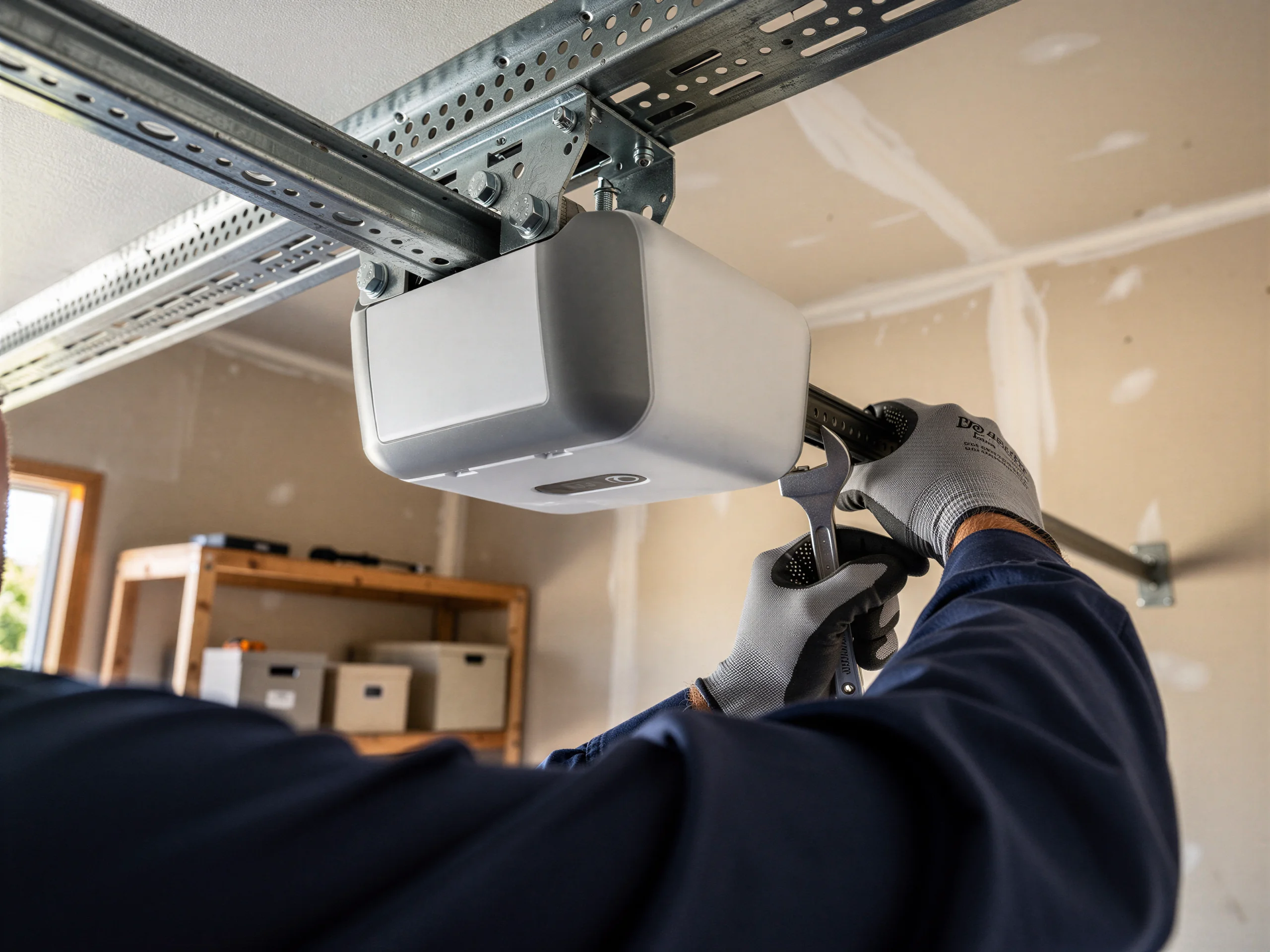
A 1994 door is more likely to be a steel sectional with a torsion spring set sized for a lighter panel, paired with a chain or belt-drive opener that's now pushing thirty years old.
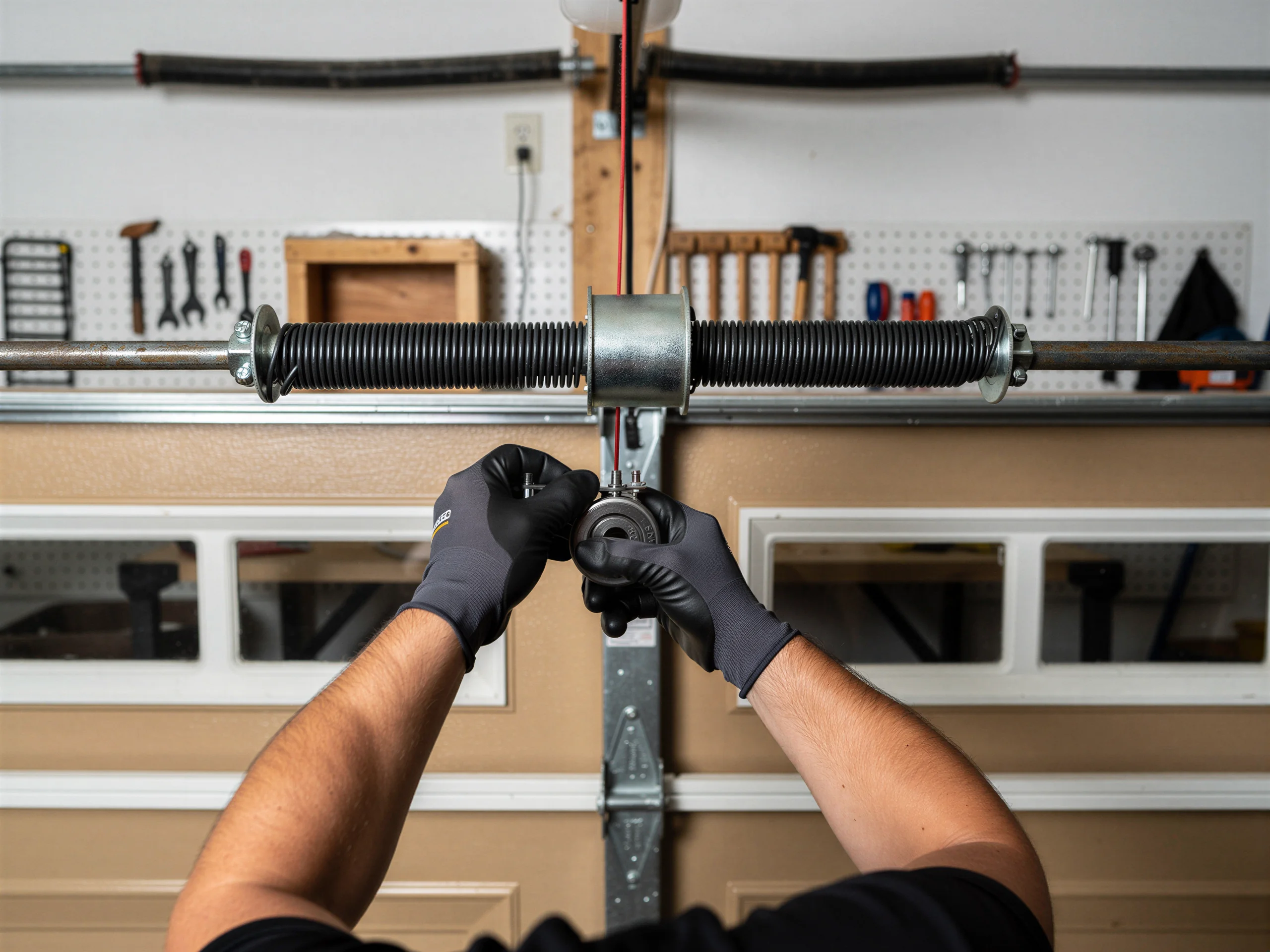
The failures we see here run toward worn nylon rollers going brittle, opener logic boards that have simply aged out, and torsion springs that hit the end of their cycle count right around now, since most springs are rated for a set number of open-close cycles and thirty years of daily use gets you there.
Cables fraying at the bottom bracket show up too, especially on doors that never got a spring tension check. What we don't see as much here, compared to the older pockets of the service area, is the one-piece swing-up door or the odd side-mounted torsion setup that older stock still carries. Pleasant Prairie's housing age works in its favor on that front - parts are more standard, easier to source.
Warning signs
If your opener runs but the door doesn't move, or moves and then reverses partway up, that's usually the travel limits or the safety sensors on a door of this era - both are common failure points on openers from the 1990s and early 2000s once the internal potentiometer or circuit board starts to drift.
A door that's noticeably heavier to lift by hand than it used to be is telling you a spring has lost tension, even if it hasn't fully broken yet. A loud bang followed by the door refusing to open at all is almost always a torsion spring letting go - on a thirty-year-old door, that's wear, not bad luck.
Rollers that look chalky or worn flat on one side are nylon rollers past their life, a part this housing stock uses heavily since it was the standard roller material by the mid-90s.
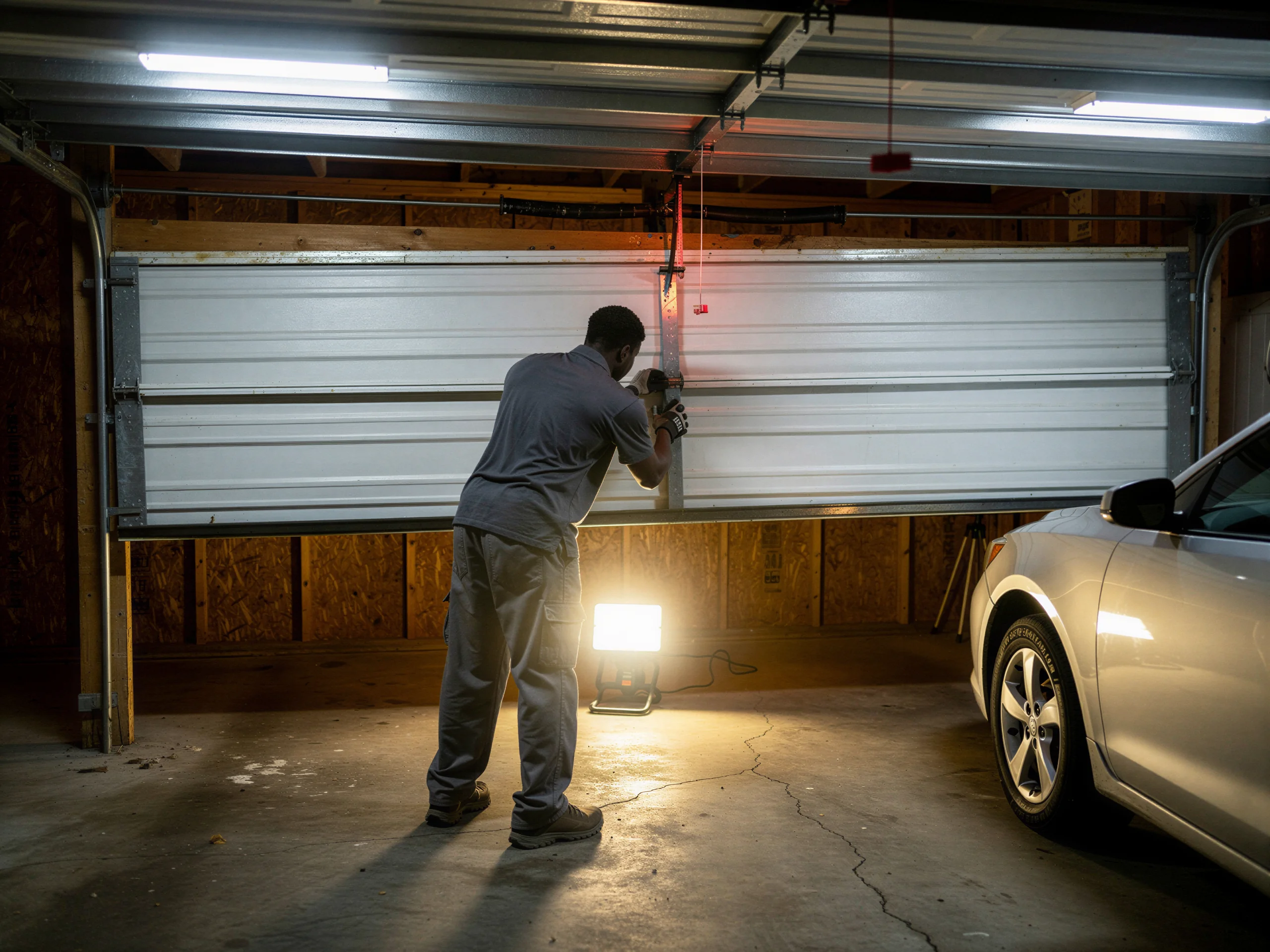
If the door shudders or jumps as it moves, check the track alignment before assuming it's the opener; track issues get blamed on openers more than they should. Sagging at the bottom corner of a wood-look steel door usually means a bottom bracket or hinge has worked loose, which is common on doors that have never had hardware re-torqued since installation.
Local causes
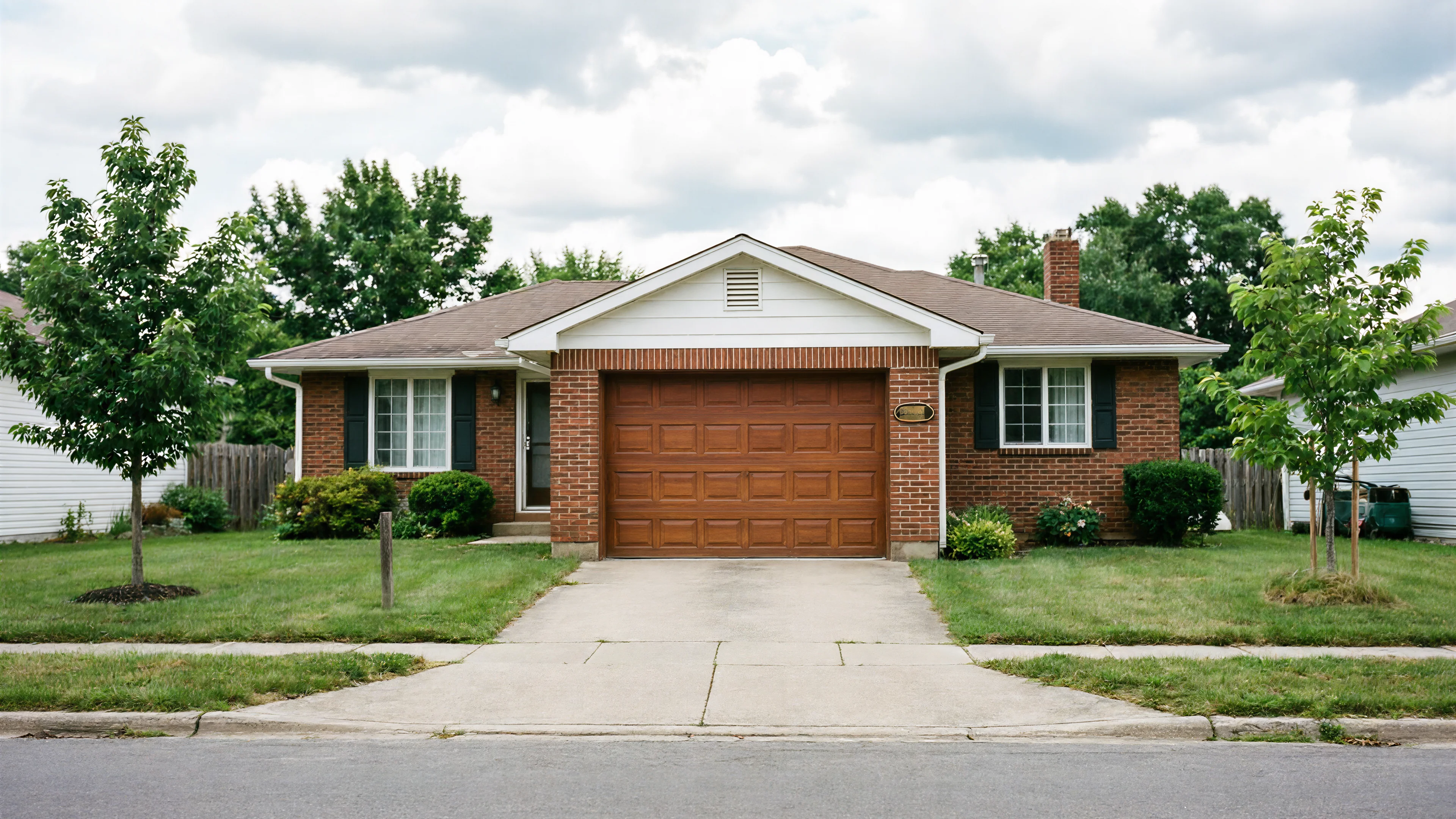
Wisconsin's cold-moderate climate band means real freeze-thaw cycles every winter, and that's hard on a door regardless of its age. But the specific way it hits Pleasant Prairie's housing stock comes down to timing: doors built around 1994 are old enough now that their original lubricant has long since dried out of the hinges and rollers, and cold makes dried-out hardware bind and crack rather than flex. A spring that's already near the end of its rated cycle count is more likely to snap on a cold morning than a mild one, because cold steel is less forgiving under load.
The area's median household income, just over $103,000, also means more of these homes carry two-car or larger openers moving heavier insulated doors - doors that put more strain on aging torsion hardware than a single lightweight door would. None of that is unique to any one house, but it's consistent across a housing stock that mostly landed in the same 20-year window, which is why we see the same handful of failures repeating across Pleasant Prairie rather than the wider mix of problems you'd get in an area with a broader range of build years.
Timing
We run this job out of Kenosha, about 4 miles from Pleasant Prairie, so there's no separate branch or local depot here - just the truck making a short drive.
Most spring replacements and roller jobs are same-visit work once we're on site; we carry standard torsion springs and rollers because this housing stock is consistent enough that we know what we'll need before we arrive. Where it slows down is opener parts.
If a 1990s-era opener's circuit board has failed outright rather than just needing a sensor realignment, exact replacement boards for some older models aren't something we keep on the truck, and we won't pretend otherwise - that can mean a short wait on a part, or a conversation about whether replacing the whole opener makes more sense than chasing a board for a unit that old. We'll tell you which makes sense for your door rather than defaulting to the more expensive option.
Booking
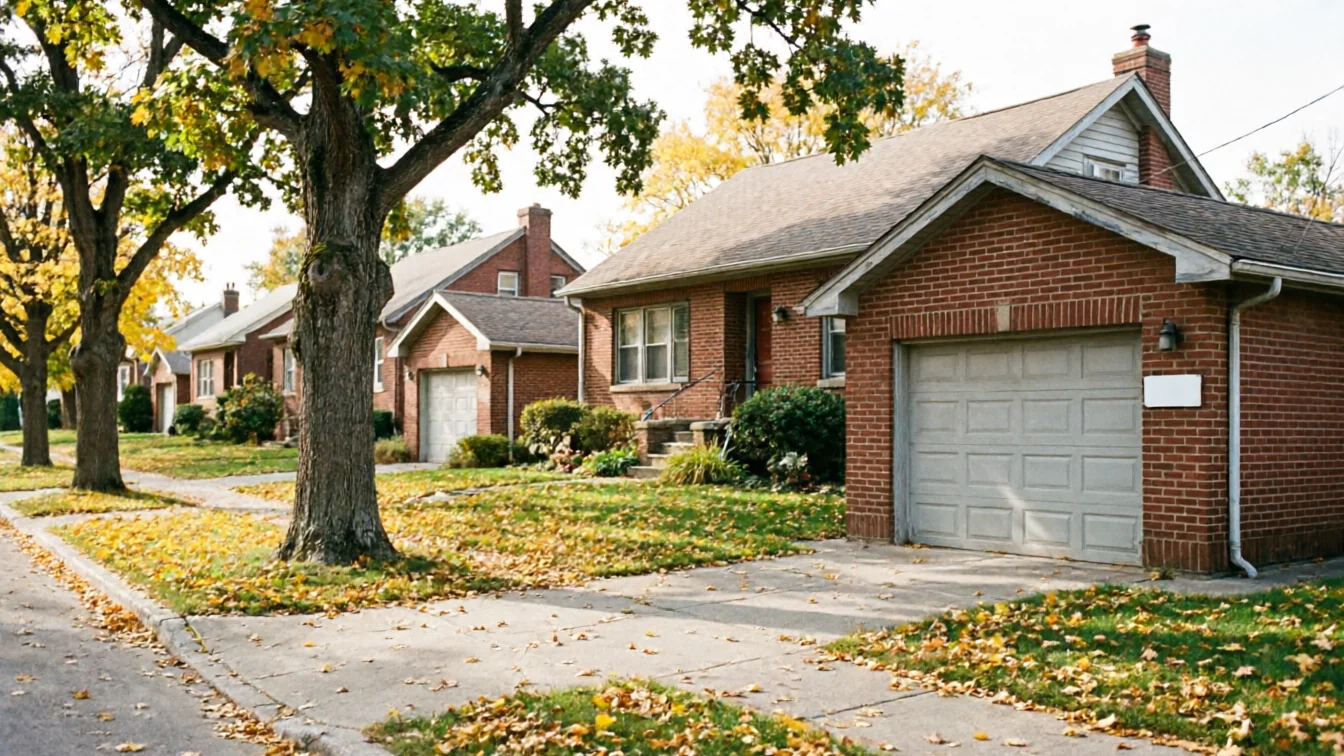
Tell us what the door is doing - won't open, reverses, makes a bang, feels heavy - and we'll bring the right parts for a 1990s-stock door on the first trip rather than guessing. Given Pleasant Prairie's build year sits well past the service area's overall median, we come prepared for sectional steel doors and chain or belt drive openers rather than the older one-piece or swing-up hardware you'll find in the area's oldest pockets.
If you want more on how we cover this part of the service area, see garage doors in Pleasant Prairie, or for the full range of repair work we run out of our Kenosha base, see garage door repair in Kenosha, WI.
Questions
Housing age is the reason. Pleasant Prairie's median build year is 1994, about 18 years newer than the median across the rest of the service area. That means doors and openers here are mostly from the same 20-year window, so the same wear points - nylon rollers, aging circuit boards, end-of-life torsion springs - show up again and again.
No. We run out of Kenosha, about 4 miles away, and travel to Pleasant Prairie for jobs. There's no separate branch here, just a short drive for the truck.
Springs are rated by cycle count, not age, but a door original to a house built around 1994 has likely racked up enough open-close cycles by now that it's near or past that rating. If your door feels heavier to lift by hand than it used to, that's usually the first sign.
Explore more
Ready when you are
Kenosha Garage Door Pros repairs and installs garage doors, springs and openers in Kenosha, WI and the surrounding area.