
No same-hour promises
What that means in practice: we don't promise a same-hour window on the phone, because an honest dispatch time depends on where the truck already is that day, not on a marketing line.
Mount Pleasant, Kenosha WI
Garage door repair and install for Mount Pleasant, WI, 8 miles from our Kenosha shop. We know the 1980s-era hardware common on this side of the service area.
What we do here
Response times
We run out of Kenosha, about 8 miles from Mount Pleasant, so we don't pretend to have a crew sitting on your street. There's no local depot here - the truck comes from Kenosha every time, same as it does for the other thirteen communities we cover.
What that means in practice: we don't promise a same-hour window on the phone, because an honest dispatch time depends on where the truck already is that day, not on a marketing line.
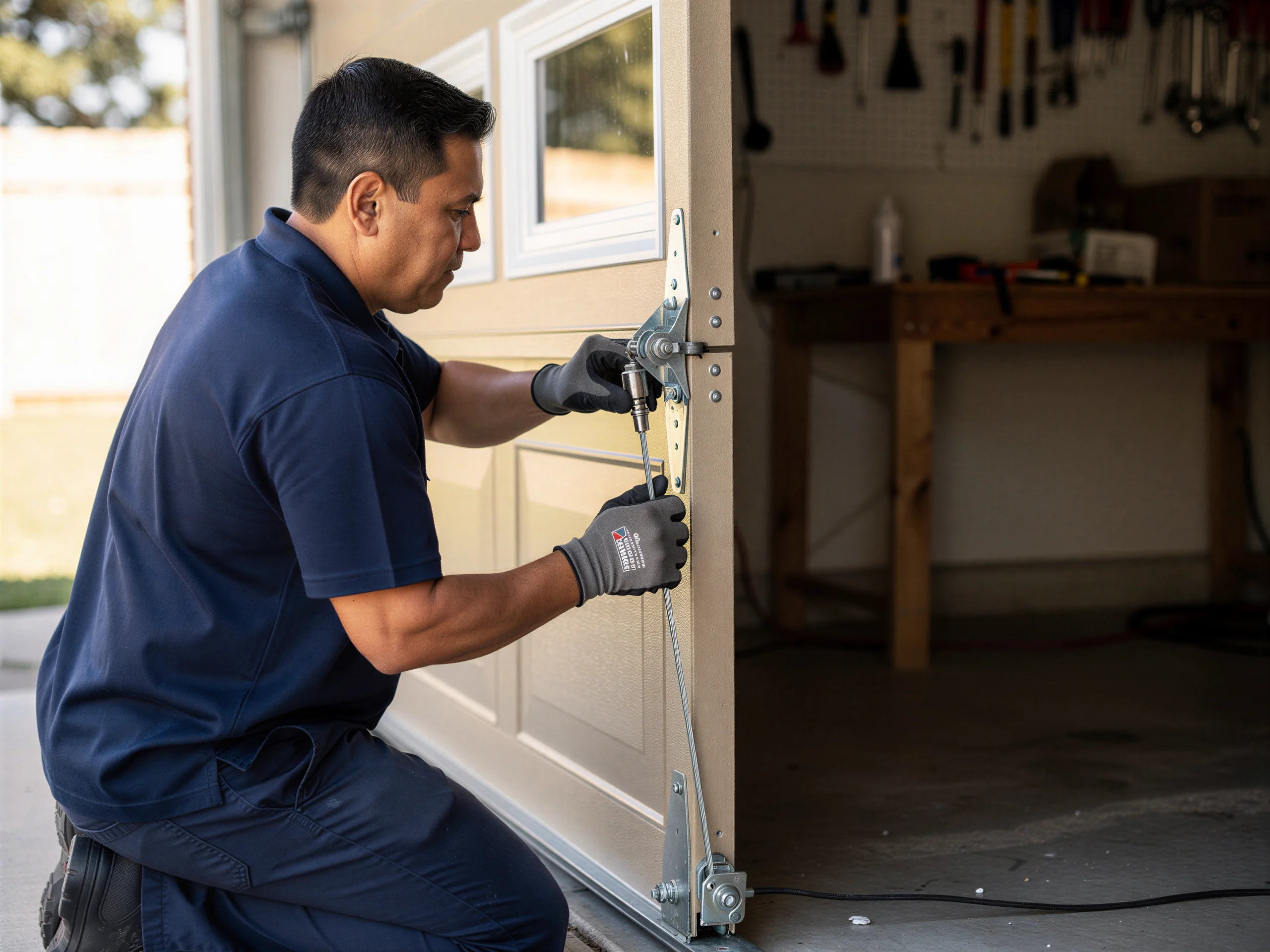
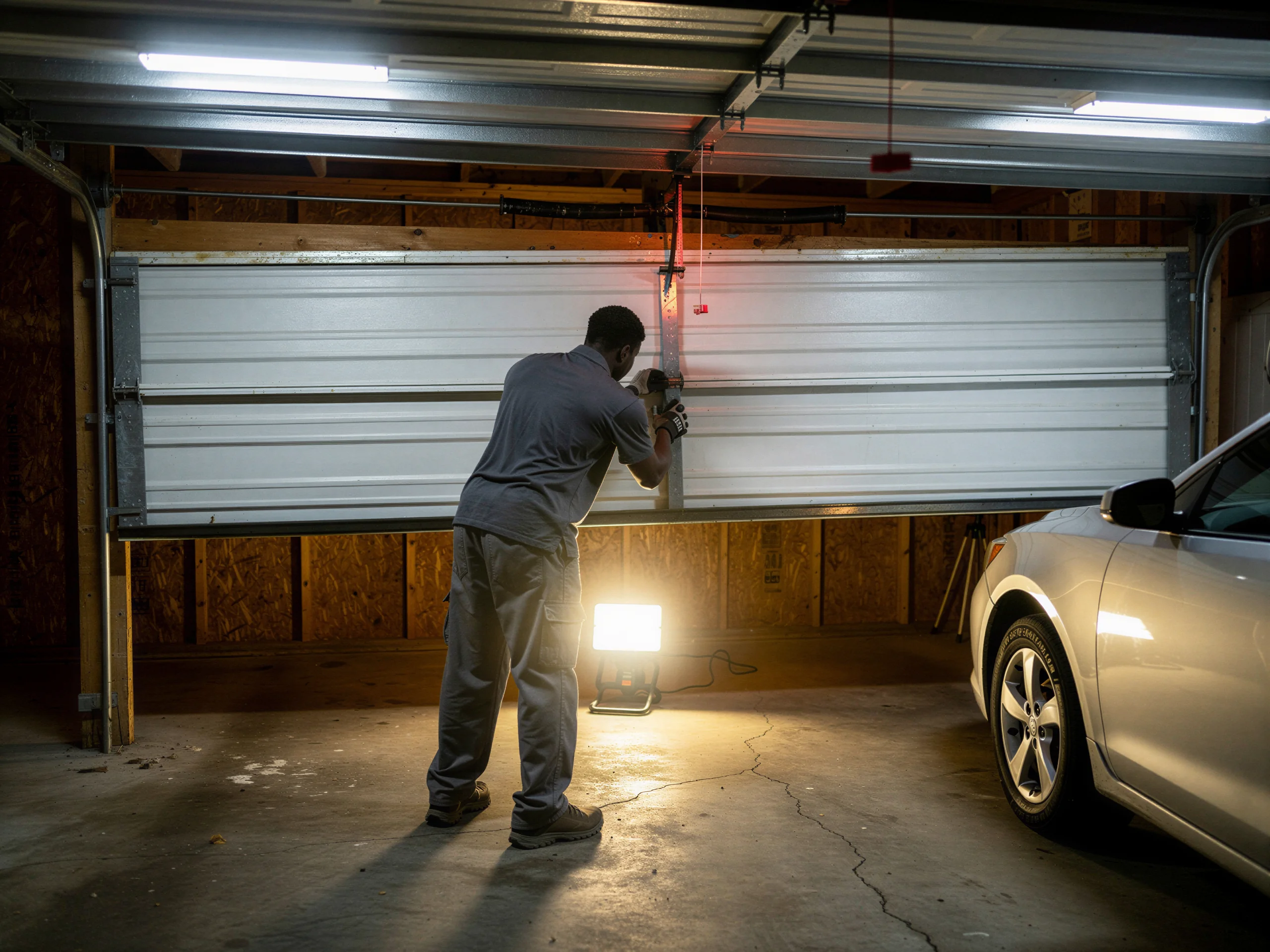
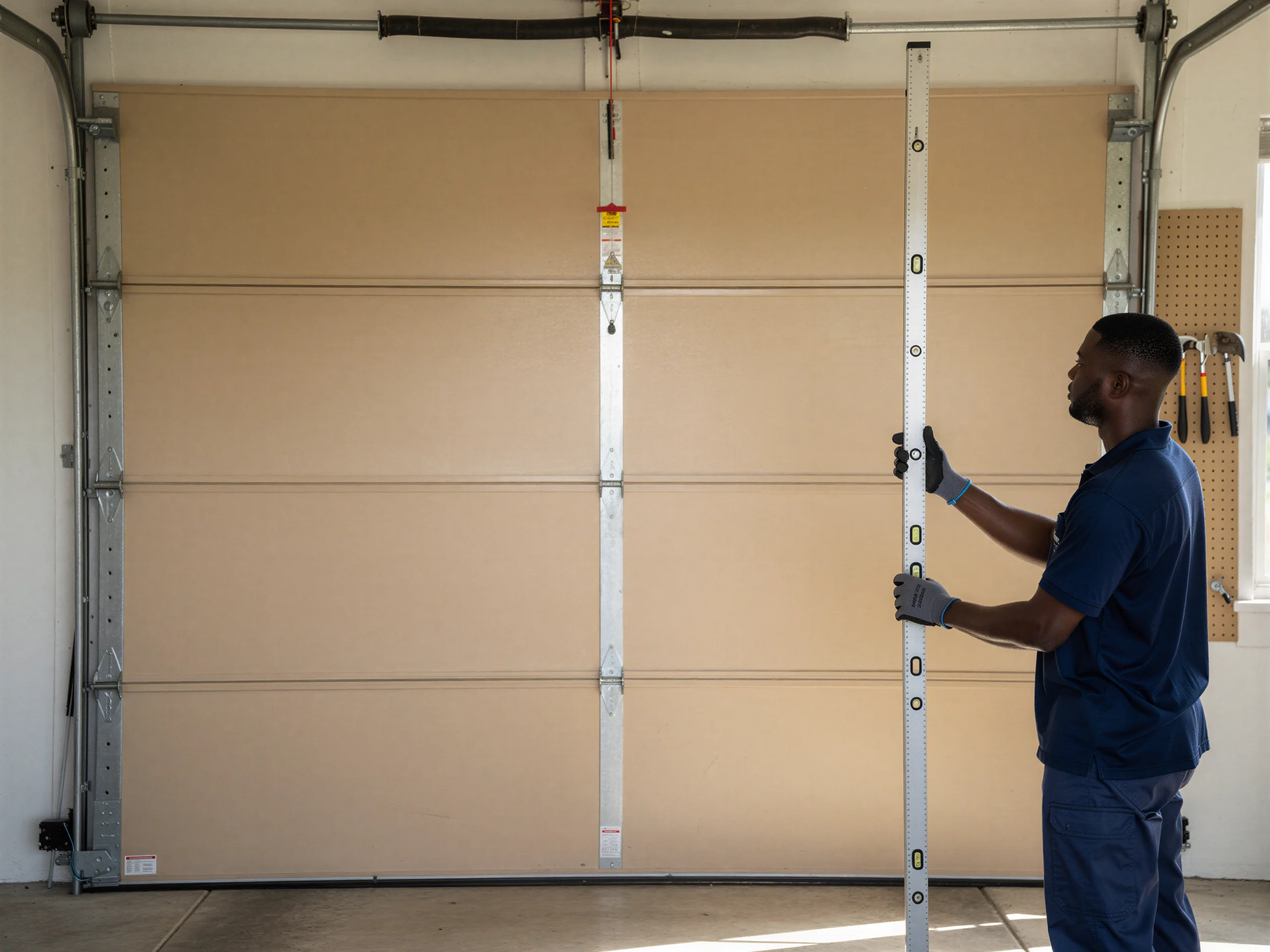
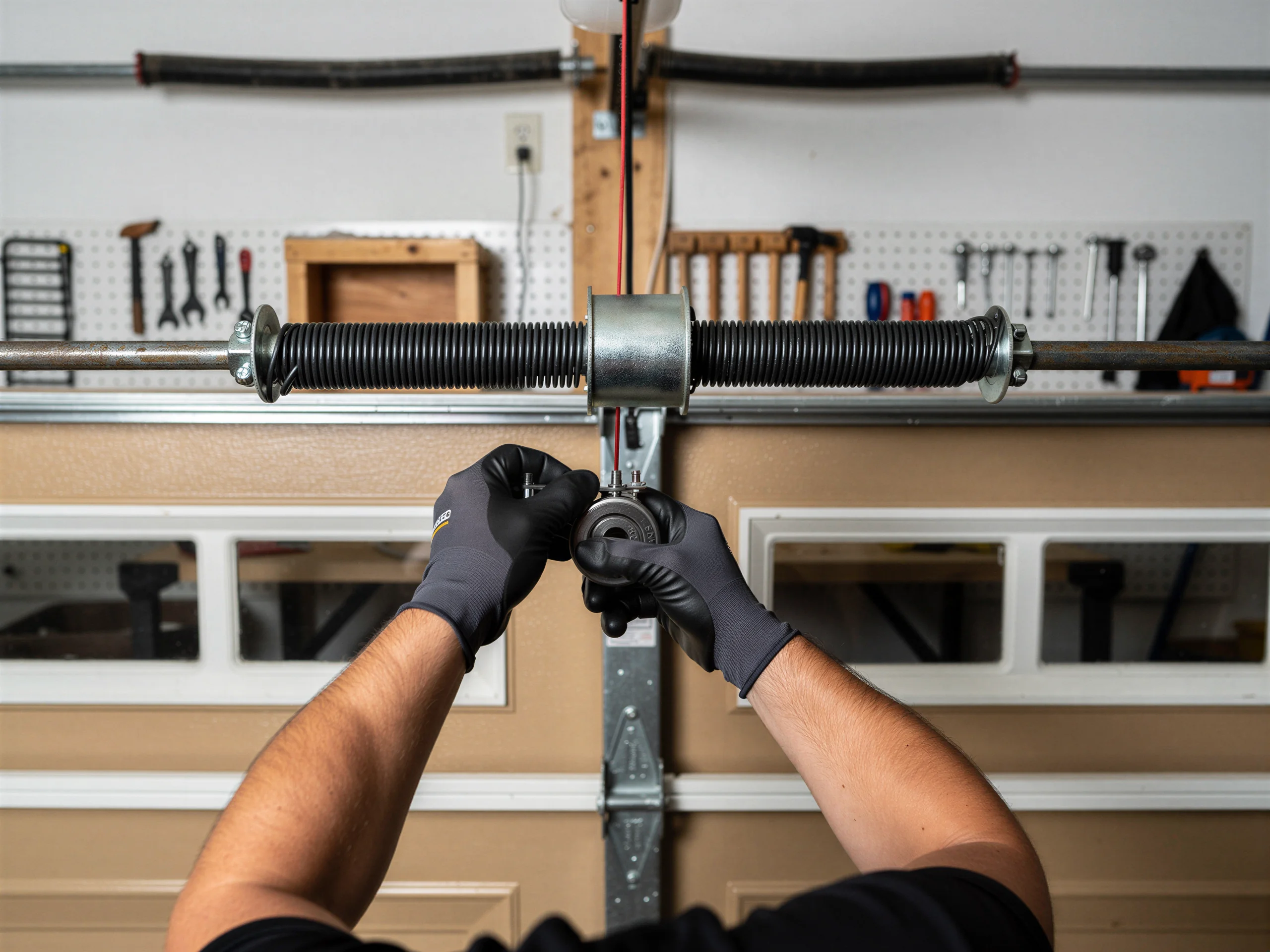
What we can tell you is that Mount Pleasant is close enough that drive time isn't the bottleneck most days - it's parts. A stuck torsion spring or a dead opener board we usually carry on the truck. A specific panel match for a less common door style sometimes means a second trip.
We'd rather tell you that up front than have you wait on a promise we made up. If your spring snapped and the door won't move at all, say so when you call. That's a different kind of job than a noisy roller, and it changes what we bring.
Local housing
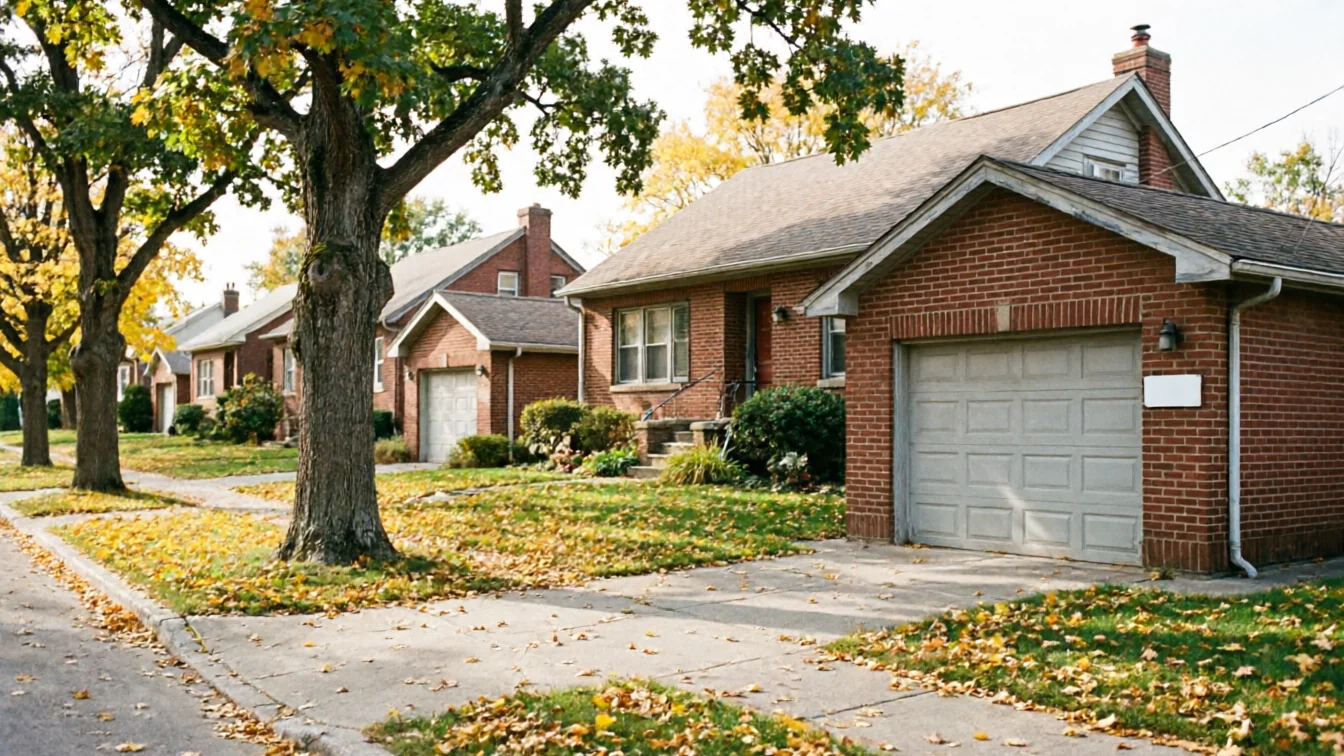
Mount Pleasant's housing runs younger than the service-area median. Across the 14 communities we cover, the typical house dates to 1976, with stock spread from 1964 to 1994. Here, the median build year sits at 1981 - five years newer than the regional midpoint. That gap matters more than it sounds like.
A 1981 house was usually built with a sectional steel door on extension springs mounted along the horizontal track, not the one-piece swing-up or early torsion setups common on the oldest streets in this area. The hardware families aren't interchangeable, and a tech who shows up expecting 1960s parts on a 1981 door is going to be surprised.
Mount Pleasant has roughly 11,560 households, a meaningful slice of the 52,202 households across our full coverage area, and a median income of $90,189 - close to, but a bit under, the $92,803 median for the service area overall. None of that tells you what's behind your own drywall, but it's the backdrop. Combined with the cold-moderate climate band this whole region sits in, steel doors here see real seasonal stress on seals and rollers even when they're younger than the regional average suggests.
Old vs new homes
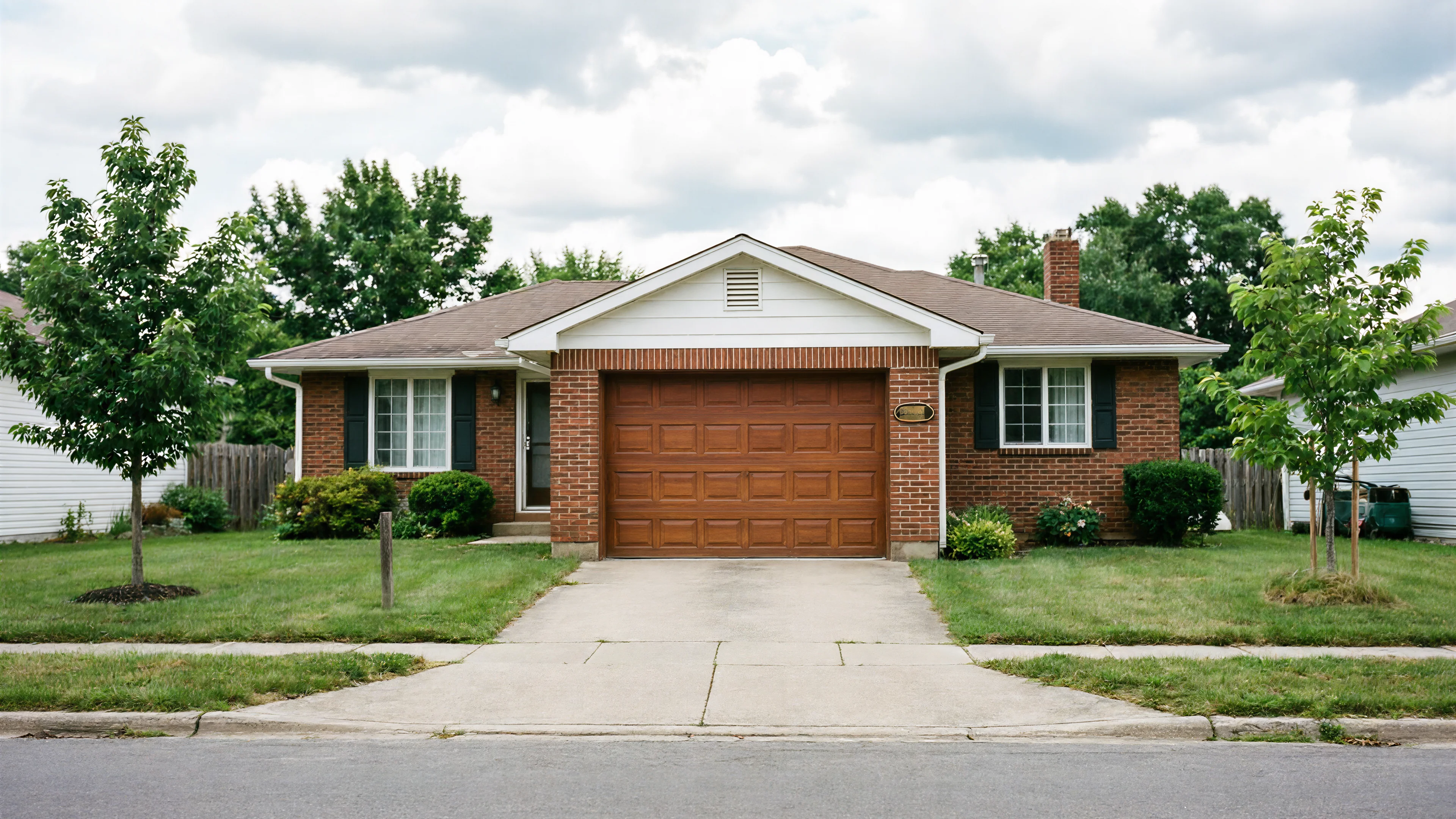
Not every block in Mount Pleasant was built the same year, obviously - a median of 1981 covers a spread, not a single date. Streets that went in earlier, closer to the 1964-1976 range the rest of the service area leans toward, are more likely to still carry original torsion hardware on steel or even older wood-composite doors.
Streets built later into the 1980s and early 1990s tend toward lighter steel sectional doors with extension spring setups and early chain-drive openers, some of which have already been swapped once by a previous owner. This isn't a hard rule you can read off a map - infill and remodels happened everywhere - but it's a real pattern.
If you know roughly when your subdivision went up, that's more useful to us on the phone than the make of the door, because springs and drums get replaced over the decades while the house's build era tends to set what the original bones looked like.
We don't have a street-by-street breakdown to hand you, and we're not going to invent one. What we do have is the regional pattern, and it's worth mentioning when you call so we bring the right spring cones and track hardware the first time.
Warning signs
On the older end of Mount Pleasant's stock - houses closer to the 1964-1976 range - we still find side-mounted torsion springs and narrower tracks that don't match what's sold off the shelf today.
Those jobs usually run longer because we're adapting modern parts to an older frame, not swapping like for like. On the newer end, doors built through the 1981 median and into the late 1980s and early 1990s are more often standard sectional steel on extension springs, with early-generation chain-drive openers that are now thirty-plus years old themselves.
The common failure there isn't the door section - it's the opener's gears and the spring fatigue that comes with age, not design. Either way, our cold-moderate climate band means winter is hard on whichever hardware you've got: stiff lubricant, shrinking weatherstrip, and springs that were already near the end of their cycle count failing on the first deep-cold morning.
One limitation worth naming: if your door is original to a 1960s-era house and badly out of square, patching the spring won't fix the underlying rack, and we'll say so instead of selling a repair that won't hold.
Service areas
Questions
No. We run out of Kenosha, about 8 miles away, and drive out for every call in Mount Pleasant. There's no local depot here, so we won't claim a response time we can't back up - drive time is short, but it still depends on where the truck is that day.
Depends on when your street went up. Mount Pleasant's median build year is 1981, newer than the 1964-1976 range common elsewhere in the service area, but older streets here can still carry original side-mounted torsion hardware. Tell us roughly when your subdivision was built and we'll bring the right parts.
A lot of Mount Pleasant houses built through the early 1990s got early chain-drive openers that are now over thirty years old. Gears wear out and circuit boards fail with age - it's not a design flaw, just a part at the end of its life, usually cheaper to replace than keep patching.
Ready when you are
Kenosha Garage Door Pros repairs and installs garage doors, springs and openers in Kenosha, WI and the surrounding area.