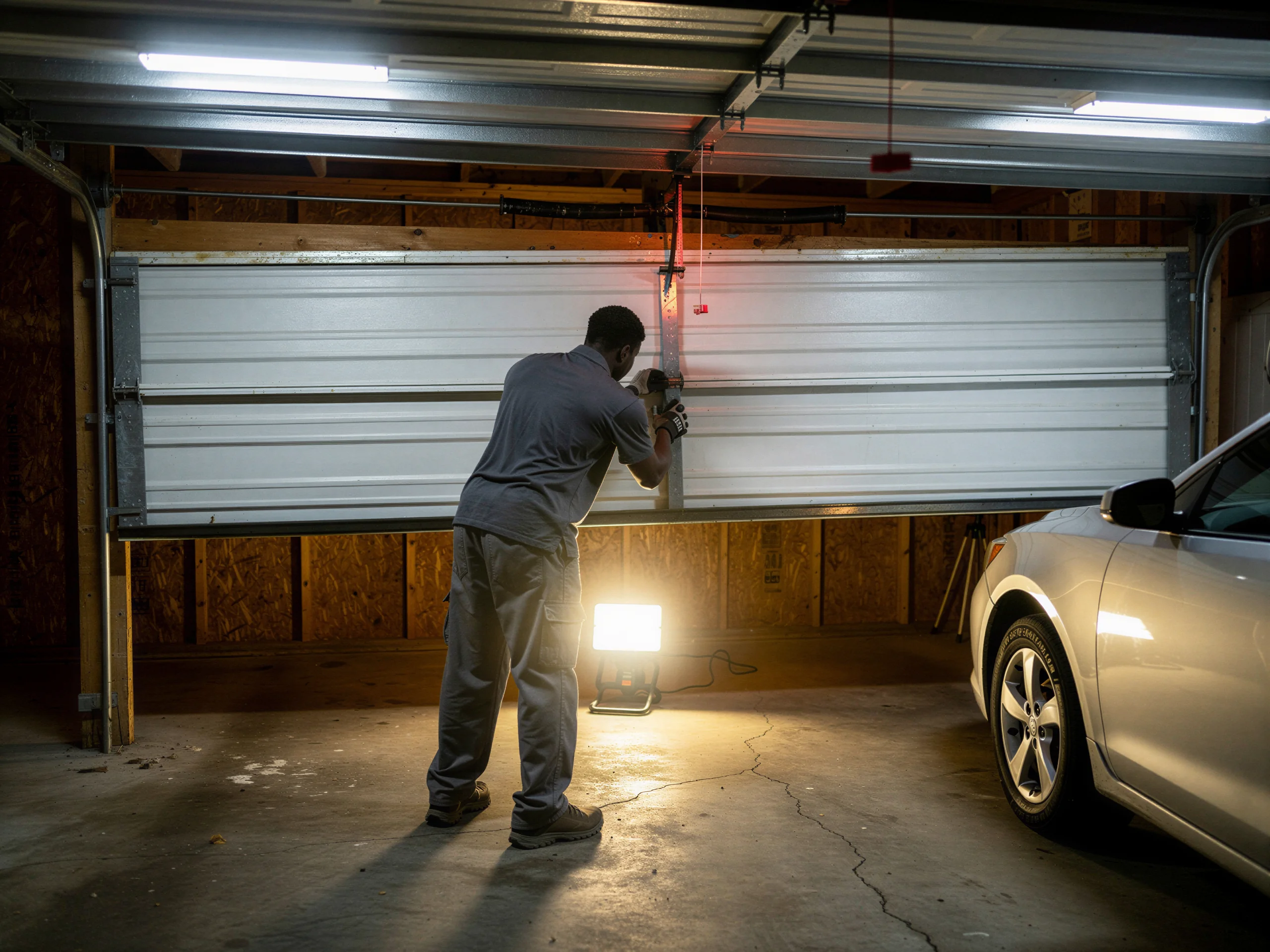
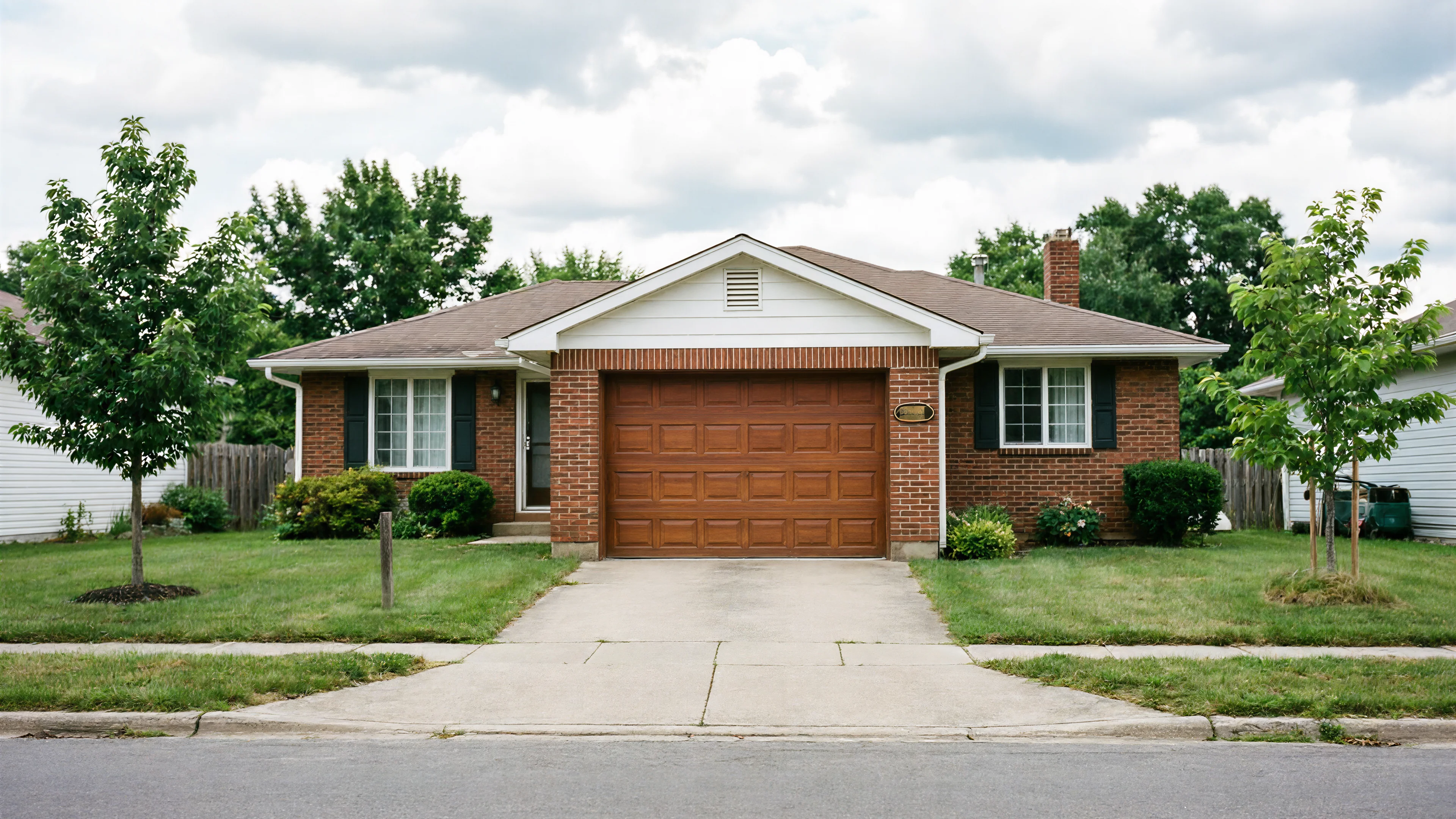
Most of the houses this service area is built from went up between 1964 and 1994, with the median sitting around 1976, and that build era matters more than people expect. A torsion spring is rated for a set number of open-close cycles, and springs installed when these houses were new are, in a lot of cases, decades past that rating even if nobody's touched them. Original openers from that same stretch of construction are also reaching the end of their mechanical life at roughly the same time, which is why we see spring failures and opener failures cluster in the same older neighborhoods rather than spread evenly across newer construction.
The cold-moderate climate here adds to it. Steel contracts in cold weather, and a torsion spring that's already fatigued is far more likely to snap on a sub-freezing morning than in July, because the metal has less give left in it right when the temperature swing puts the most stress on the coil. Combine 1960s-70s hardware with a hard winter morning and you get exactly the kind of sudden failure that doesn't wait for a convenient appointment. This isn't a general garage door problem - it's what happens when a specific building era meets a specific climate.