
Blog
Openers, Power Cuts, and the Houses Kenosha Actually Has
Most Kenosha homes date to 1964-1994, and that opener age plus cold-climate power cuts changes what actually breaks. Here's what's normal and what's not.
When Waiting Is Fine
If the power drops and your opener goes dark, you don't need to call anyone that night. The motor unit itself almost never gets damaged by a power cut - it just stops mid-cycle, same as any other appliance. In the houses that make up most of this area, built between 1964 and 1994, the opener is very often not the original one anyway; it's a replacement bolted onto older track and hardware, and that combination tolerates a cold outage fine as long as nobody forces the door.
What's fine to leave until morning: the door sitting half-open or fully closed with no opener response, a chain or belt that's gone slack because the carriage disengaged, or a keypad that won't light up. None of those are emergencies. Pull the manual release cord, confirm the door moves by hand, and if it does, you're not stuck - you're just without automatic operation until the power or the opener logic resets itself. Most homeowners here find the opener comes back working fine once power is restored, with maybe a need to reprogram a remote.
What Is Going On
During a power cut, the opener's logic board loses its position memory. On the opener models common in this area's 1960s-70s housing stock - older units retrofitted into original one-piece or sectional doors - that memory loss sometimes shows up as the door reversing immediately on the next attempt, or refusing to close past a certain point. It reads like a sensor fault. It's usually just the board re-learning where open and closed are.
The bigger issue is what the power cut exposes that was already failing. A torsion spring under strain doesn't care whether the opener has power; if a cable was already fraying or a roller was already seizing, the sudden stop-and-restart cycle is what finally makes it obvious. In homes from this build era, the original torsion hardware is decades past its rated cycle count in a lot of cases, so an outage is often the thing that reveals a spring problem that was coming anyway, not the thing that caused it.
What the Weather Here Does to It
This area sits in a cold, moderate climate band, and power cuts here cluster around the same weather that stresses garage doors directly - ice load on the track, cold-stiffened lubricant in rollers, and temperature swings that shrink and expand panel seams. So when the power goes out in a winter system, you're often dealing with two problems stacked together: the opener is unresponsive, and the door itself is harder to move by hand because everything metal has contracted.
That's the detail people miss. They assume the door is stuck because of the outage. More often it's stuck because the cold has thickened the grease on the rollers and tightened tolerances in the track, and the power cut just took away the motor's ability to push through it. Manually forcing a door that's fighting cold-stiff hardware is how a bent track or a popped roller turns a simple outage into an actual repair call.
What Most People Get Wrong
The most common mistake is assuming the opener itself failed and swapping it out, when the real issue was an outage mid-cycle plus an older spring system that was already marginal. In a service area where most houses were built between 1964 and 1994, a lot of torsion springs and some cables are original or close to it, and they don't announce they're near the end - they just happen to show their age on the same night the power flickers.
The other mistake is treating the manual release as a permanent fix. It gets the door moving, but a door running on hand-operation for days because nobody reset the opener logic puts uneven strain on whoever's lifting it, especially on the heavier double doors common in this area's housing stock. One honest limitation: we don't carry backup battery units for every opener model out there, and on some of the older retrofitted systems common here, a battery backup isn't really feasible without a full opener swap - worth knowing before you ask for one.
Questions
Common questions
Will a power cut damage my garage door opener?
Not on its own. The motor and logic board in most openers tolerate a cold power outage without harm. What you'll sometimes see is the opener losing its position memory and needing a reset, or acting like a sensor fault for a cycle or two. That's normal recalibration, not a failure.
Why won't my door move by hand after the power went out?
In this climate, cold often stiffens roller grease and tightens track tolerances at the same time a storm knocks out power. If the door feels stuck rather than just unresponsive, that's usually the cold, not the outage. Don't force it - forcing a cold-stiff door by hand is how a track gets bent.
Should I get a battery backup for my opener?
Depends on the opener. Newer units often support it. A lot of the openers in this area are retrofits onto older 1960s-70s hardware, and on some of those a battery backup isn't a simple add-on - it can mean replacing the whole unit. We don't stock backups for every model, so it's worth checking your opener's make before assuming it's an option.
Recommendation
You Might Also Like
More garage door guides for Kenosha homeowners.
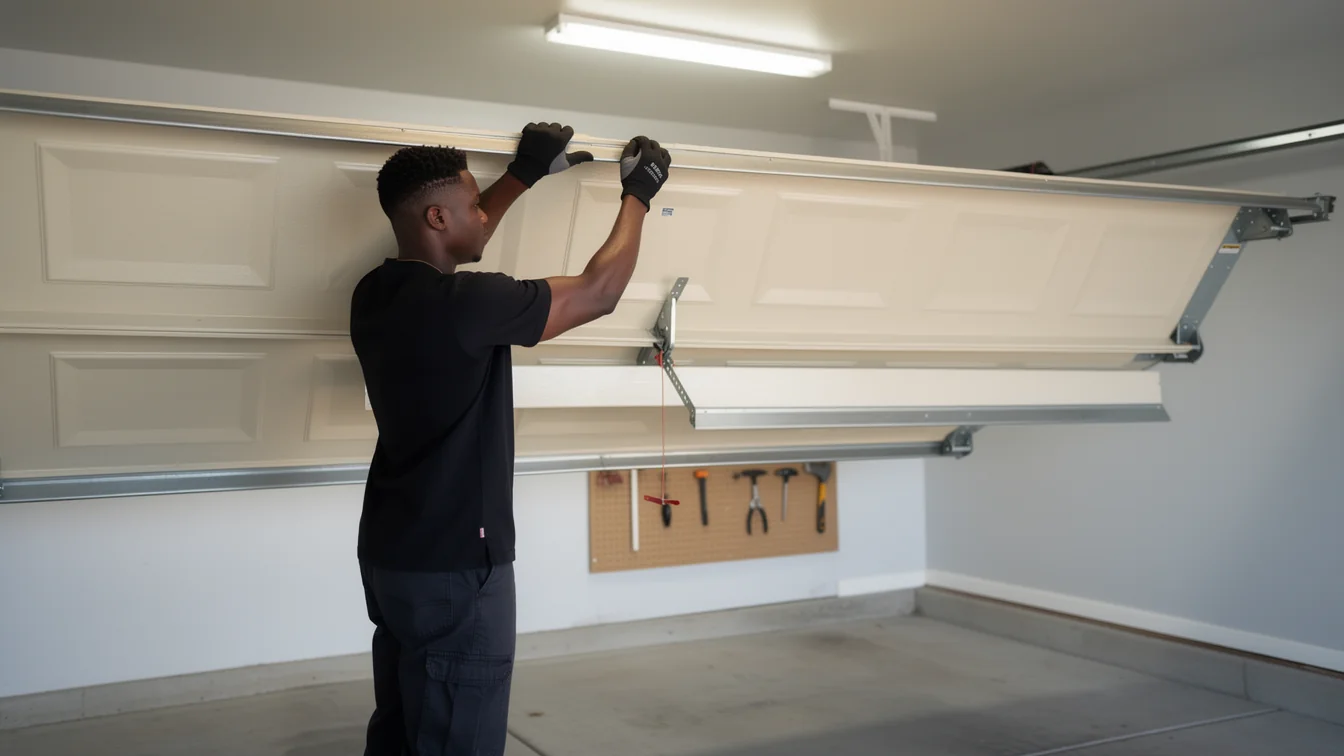
What That Grinding, Popping, or Scraping Sound Is Telling You
Most Kenosha-area homes date to 1964-1994, and the cold winters here make old rollers and springs noisy.
Read guide
What Actually Happens When We Come Out for a Service Call
A Kenosha service call checks the parts most likely to fail on 1960s-90s doors in a cold climate: springs, cables, rollers, track alignment, and opener settings.
Read guide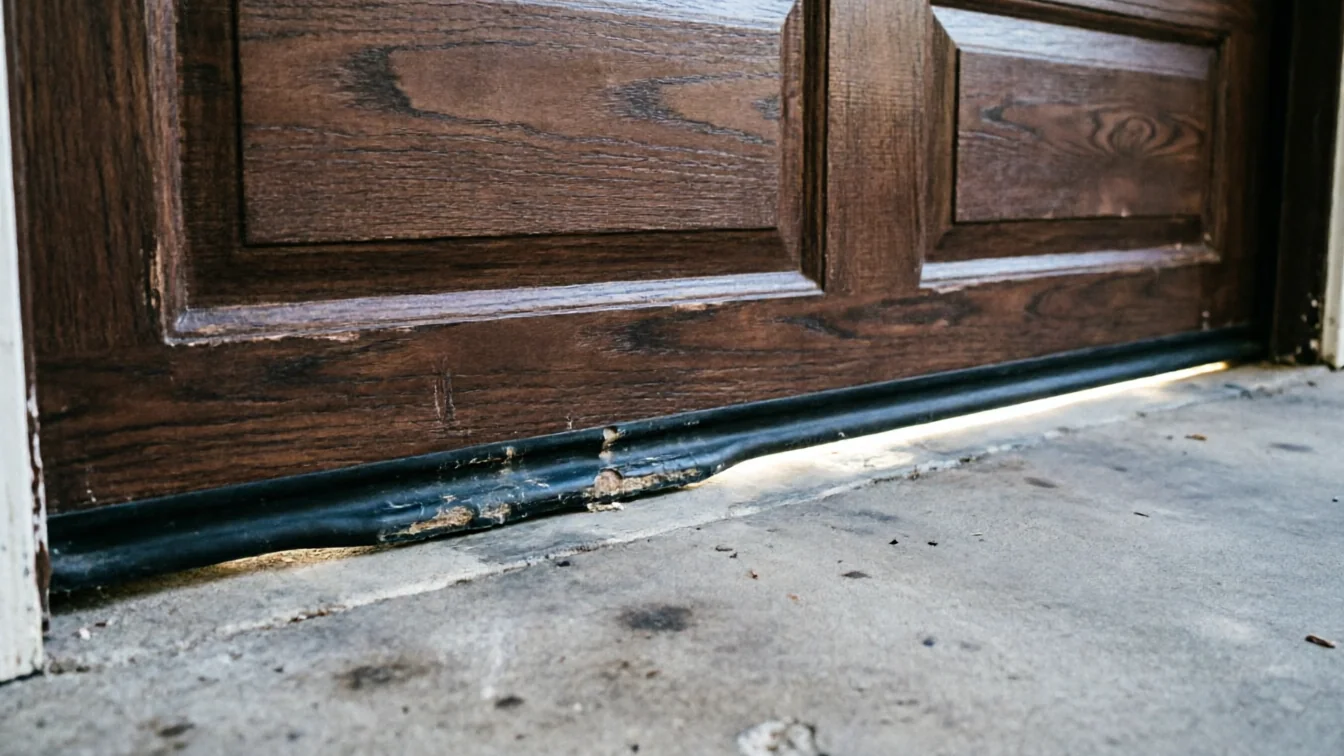
Why So Many Kenosha Garage Doors Have No Insulation at All
Most Kenosha garage doors date to 1964-1994, before energy codes required insulation.
Read guideReady when you are
Need a garage door sorted in Kenosha?
Kenosha Garage Door Pros repairs and installs garage doors, springs and openers in Kenosha, WI and the surrounding area.